
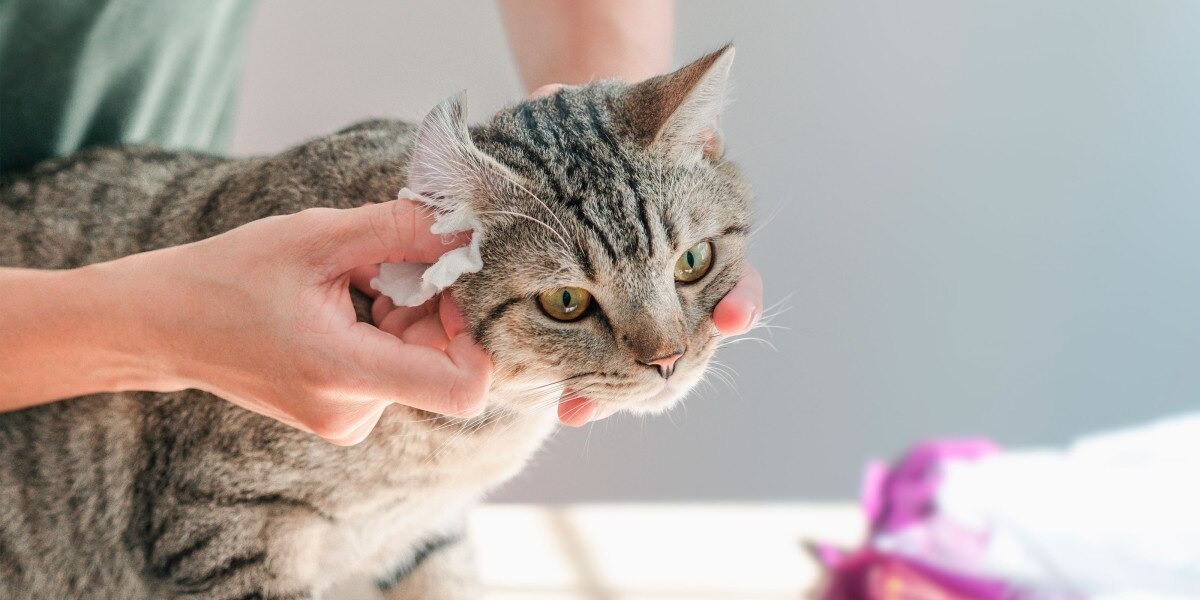
Ear mites are one of the most common causes of ear discomfort in cats, particularly in younger animals and those with outdoor access. Despite being tiny and invisible to the naked eye, they cause significant irritation and can lead to serious complications if left untreated.
Understanding what causes ear mites in cats, how they spread, and what signs to look for allows pet owners to seek treatment early and prevent the condition from progressing into a more complex ear problem.
What Are Ear Mites?
Ear mites are microscopic parasites belonging to the species Otodectes cynotis. They live on the surface of the skin inside the ear canal, feeding on skin debris, ear wax, and tissue fluids. They do not burrow into the skin like mange mites, but their feeding activity and movement cause intense irritation and a strong inflammatory response in the ear canal.
An adult ear mite completes its entire life cycle on the host, from egg to adult, in approximately three weeks. This rapid reproduction means that a mild infestation can become heavy within a short period if not treated promptly.
Cat ear mites are highly contagious between animals. They spread through direct contact and can also survive briefly in the environment, making transmission possible even without prolonged physical interaction between pets.
What Causes Ear Mites in Cats
The primary cause of ear mites in cats is direct contact with another infected animal. Understanding the specific transmission routes helps cat owners identify where exposure may have occurred.
Direct Animal-to-Animal Contact
The most common route of transmission is close physical contact with an animal that already has an active infestation. This includes:
- Cats that live together indoors
- Contact with dogs in the same household (dogs can carry and transmit Otodectes cynotis)
- Encounters with stray or outdoor cats
- Animals sharing bedding, grooming tools, or resting areas
A cat does not need to show visible symptoms to be a carrier. Some animals harbor ear mites without displaying obvious signs, which allows them to pass the infestation to other pets unknowingly.
Exposure During Boarding, Grooming, or Veterinary Visits
Shared environments where multiple animals come into contact carry a risk of parasite transmission. Boarding facilities, grooming salons, and shelters can be exposure points, particularly if hygiene protocols are inconsistent or if an infested animal was recently housed in the same space.
Outdoor Access and Stray Animal Contact
Cats with any outdoor access face a higher risk of encountering infested strays or wildlife. Even brief contact is enough for mites to transfer between animals.
For cats living in New York City, outdoor access often means shared hallways, rooftops, or supervised walks where contact with other cats or animals is possible. This is relevant even for cats that are primarily considered indoor pets.
Environmental Exposure
While ear mites spend the majority of their life cycle on a host, they can survive in bedding, blankets, and soft furnishings for a short period. This means that a cat can potentially acquire cat ear mites through contact with recently contaminated environments, even without direct animal contact.
Risk Factors That Increase Susceptibility
Certain cats are more prone to developing ear mite infestations:
- Kittens and young cats whose immune systems are still developing
- Multi-cat households where transmission between animals is easier
- Cats with outdoor access, even partial or supervised
- Recently adopted cats from shelters or rescue environments
- Immunocompromised cats who have reduced ability to limit mite population growth
Age and housing situation are the two most significant risk factors. Kittens brought into a home that already has resident cats are at high risk of acquiring cat ear problems related to mite infestation.
Recognizing the Signs of Ear Mites in Cats
The clinical signs of ear mites are driven by irritation, inflammation, and the body’s response to the mite’s presence in the ear canal.
Head Shaking and Ear Scratching
The most visible signs of cat ear mites are persistent head shaking and scratching at or around the ears. Cats may scratch using their hind paws or rub their ears against furniture, carpet, or other surfaces to relieve discomfort.
Dark Discharge in the Ear Canal
One of the most characteristic signs of an ear mite infestation is the presence of dark, dry, crumbly discharge inside the ear canal. This debris is a mixture of mite waste, dried blood, skin cells, and ear wax. It is often described as resembling coffee grounds in appearance and texture.
This discharge is distinct from the normal pale yellow or light brown wax seen in healthy cat ears. If dark, granular material is visible in your cat’s ear canal, a veterinary evaluation is appropriate.
Redness and Inflammation Inside the Ear
The inner surface of the ear flap and the visible portion of the ear canal may appear red and inflamed. This is a direct result of the mite’s irritating activity and the cat’s own scratching response.
Odor From the Ear
An unusual or unpleasant smell from the ear can indicate a secondary bacterial or yeast infection that has developed alongside the mite infestation. Secondary infections are common in cats with cat ear problems related to mites because the damaged, inflamed ear canal becomes an environment where pathogens can grow rapidly.
Skin Wounds Around the Ears and Head
Intense scratching can cause self-inflicted wounds, scabbing, and crusting around the ears, on top of the head, and along the neck. In severe cases, hematomas (blood-filled swellings) can form on the ear flap from repeated trauma.
Behavioral Changes
Cats with significant ear discomfort may become irritable, withdraw from interaction, tilt or hold their head to one side, or show unusual sensitivity when the ear area is touched.
Diagnosing Ear Mites
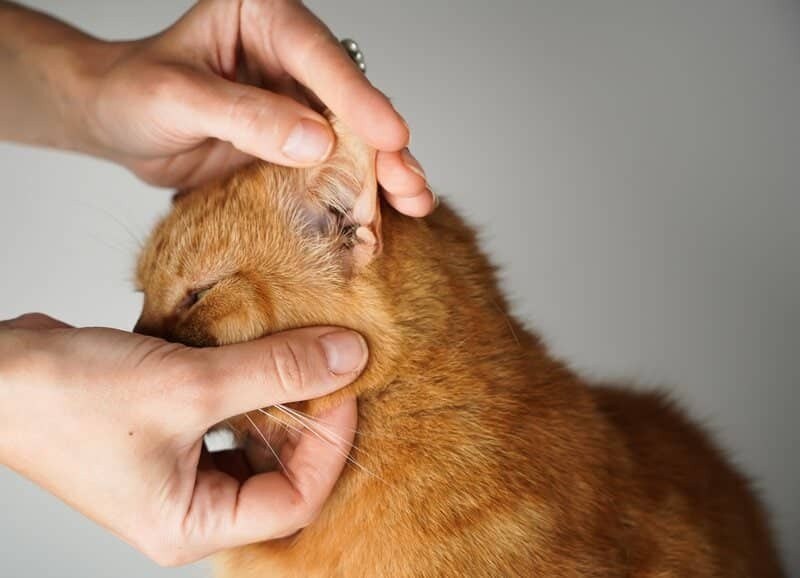
Diagnosis requires a veterinary examination. While the clinical signs are often suggestive, several conditions produce similar symptoms, including bacterial ear infections, yeast infections, and other types of mites. Accurate identification of the cause determines the right treatment.
Otoscopic Examination
Using an otoscope, the veterinarian examines the ear canal directly. Cat ear mites are visible under magnification and may be seen moving within the ear canal or the collected debris. The condition of the ear canal wall and eardrum can also be assessed during this examination.
Ear Cytology
A swab of the ear discharge is examined under a microscope. This identifies the mites themselves, their eggs, and any secondary organisms such as bacteria or yeast that require concurrent treatment.
Skin Examination
Because mites can migrate beyond the ears to other parts of the body, the veterinarian may examine the skin around the head, neck, and tail where mites sometimes establish secondary populations.
Treatment
Effective treatment of what causes ear mites in cats addresses both the current infestation and the prevention of reinfestation.
Ear Cleaning
Before topical treatments can be applied effectively, the accumulated debris must be removed from the ear canal. Professional ear cleaning uses appropriate solutions and equipment to flush the canal gently without causing further irritation or damage to the delicate ear structures.
Attempting to clean severely inflamed or infected ears at home using cotton swabs or inappropriate tools can push debris deeper and cause injury. A veterinary-administered cleaning ensures the procedure is done safely and effectively.
| What Professional Ear Cleaning Addresses | Benefit |
| Removal of mite debris and discharge | Improves comfort and allows medication to reach affected tissue |
| Assessment of canal and eardrum condition | Confirms it is safe to apply topical treatment |
| Cytology of discharge | Identifies secondary infections requiring concurrent treatment |
Antiparasitic Medications
Several effective topical treatments are available for cat ear mites. These include:
- Single-dose spot-on treatments applied to the skin that eliminate mites systemically
- Ear drops applied directly to the canal over a prescribed course
- Multi-parasite treatments that address mites alongside fleas and other external parasites
The choice of product depends on the cat’s overall health, any concurrent infections, and whether other household pets require simultaneous treatment.
Treating All Pets in the Household
Because cat ear mites are highly contagious between animals, all pets sharing the household must be treated at the same time, regardless of whether they are showing symptoms. Treating only the affected cat while leaving other animals untreated will result in reinfestation.
Environmental Decontamination
Washing all bedding, blankets, and soft furnishings used by the affected cat in hot water helps eliminate any mites or eggs that may have been shed into the environment. This step is especially important in multi-cat households.
Preventing Ear Mites
Prevention focuses on reducing exposure and maintaining good ear health through regular monitoring.
Practical prevention steps include:
- Scheduling regular wellness examinations that include ear inspection
- Checking your cat’s ears monthly at home for any change in appearance, discharge, or odor
- Keeping recently adopted cats separated from resident pets until a veterinary examination has been completed
- Using broad-spectrum parasite preventatives that include mite coverage for cats with outdoor access
- Cleaning shared bedding and resting areas regularly
Monthly at-home ear checks take only a few minutes and allow early detection of any developing cat ear problems before they become entrenched infections.
When to See a Veterinarian
Veterinary evaluation is appropriate when:
- Dark, granular discharge is visible inside the ear canal
- Your cat is shaking its head or scratching its ears persistently
- Redness, swelling, or an unusual odor is present in or around the ear
- Self-inflicted wounds or scabbing have appeared around the ears or neck
- Symptoms are present in a newly adopted cat or kitten
- An existing ear condition has not responded to previous home treatment
Early treatment produces faster resolution and prevents the secondary infections and structural damage to the ear canal that can develop when mite infestations are allowed to progress.
The team at Midtown Animal Hospital provides professional ear examination and cleaning, cytology-based diagnosis, and targeted treatment plans for ear mite infestations and related cat ear problems. If your cat is showing any of the signs described above, scheduling a prompt veterinary appointment is the right next step.
Frequently Asked Questions
Q: Can ear mites spread from cats to humans?
A: Ear mites do not establish infestations in humans. Brief skin contact may cause temporary itching or mild irritation in some people, but the mites cannot complete their life cycle on a human host. Treatment of the affected animals eliminates the source of any such exposure.
Q: How long does it take to get rid of ear mites in cats?
A: Most infestations resolve within 3 to 4 weeks with appropriate treatment. The full life cycle of the mite must be interrupted, so treatment must be maintained for the recommended duration even if symptoms appear to improve early. Stopping too soon risks reinfestation from surviving eggs.
Q: Can indoor cats get ear mites without contact with other animals?
A: It is less common but possible. Mites can survive briefly on bedding or soft surfaces. More commonly, indoor cats acquire mites from a recently introduced pet or a new cat entering the household. An isolated single-cat indoor environment carries very low risk.
Q: Are cat ear mites the same as the mites that cause mange?
A: No. Ear mites (Otodectes cynotis) live on the surface of the ear canal. Mange is caused by different mite species that burrow into the skin. Both require veterinary diagnosis and treatment, but the organisms, clinical signs, and treatment protocols are different.
Q: How do I know if my cat’s ear problem is mites or a regular infection?
A: Both conditions cause scratching and head shaking, but ear mites typically produce dry, dark, coffee-ground-like discharge. Bacterial or yeast infections tend to produce moist, yellowish, or brownish discharge with a stronger odor. A veterinarian uses cytology to distinguish between them accurately.